{Ad} This is a paid collaboration, and may contain affiliate links. All opinions are honest, as always.

Are you a “heating on the minute the clocks go back” household, or do you hold out with an extra jumper for as long as humanly possible? With the Autumn Budget in the headlines, lots of us are starting to ask the same question: can I afford to put the heating on, or should I leave it off and save the money?
Trying to stay warm at home, without spending a fortune is an understandable worry, especially with recent developments in the UK. The energy price cap rose to £1,723 a year for a typical home on 1st October, and analysts expect a far bigger jump in January. The Budget brought some help, but it doesn’t change the price we pay for each unit of gas or electricity.
There’s an environmental side to this too, of course. Heating is one of the biggest parts of most homes’ carbon footprint, so every bit of energy we don’t waste is good for our bills and for the planet. The lowest-carbon energy is always the energy you don’t use. So, how can we stay warm at home, without our bills going through the roof?
The good news is that it isn’t a choice between heating on and heating off. I’ve been looking at the numbers with the team at Pro Breeze (they manufacture heaters, humidifiers and air purifiers). Read on to find out how a few small changes can make a real difference to your bills, and your carbon footprint.
What the Budget Means for Your Heating Bill
The Budget on 28 October offers a little relief, but the cost of each unit of energy is still set by Ofgem’s price cap, and that’s forecast to climb. The average of supplier predictions tracked by MoneySavingExpert points to around £2,188 a year from January 2027, roughly 27% higher than today. Ofgem is due to confirm the figure on 25 November.
The headline measure is a one-off £100 Household Energy Payment for homes in England in council tax bands A to D, paid through your council from January 2027. VAT on household electricity, which was removed on 1 October, will also stay at 0% until the end of June 2027. The government estimates that this takes around £50 off the annual price cap.
Longer term, the Chancellor has asked Ofgem to scrap the daily gas standing charge (about 30p a day) in 2027, or as soon as possible after. That cost is likely to move into the unit rate instead, so homes that use very little gas could save, while heavy users may pay more. In other words, how much gas you burn will matter more than ever. There’s also one-off help planned from spring 2027 for households still carrying energy debt from the 2022 to 2024 crisis.
There’s one small upside if you rely on plug-in heaters: with VAT removed, electricity is slightly cheaper this winter than it would otherwise be, while gas still carries 5% VAT. Gas is still far cheaper per unit, though, so the biggest savings come from choosing how much of your home to heat, and how.
Is It Cost-Effective to Run the Heating?
Per unit of heat, gas central heating is still roughly three times cheaper than plug-in electric heat. Thankfully, we rarely need to heat the whole house, and that’s where the sums change.
Under the current cap, gas costs 7.97p per kWh and electricity 26.32p per kWh (the Direct Debit average across regions). A modern condensing boiler turns roughly 90% of its gas into heat, so each kWh of warmth costs about 9p. A plug-in electric heater turns all of its electricity into heat, but each kWh of warmth still costs around 26p.
What It Costs to Run a Plug-in Heater to Help You Stay Warm at Home
To work out what any heater costs, divide its wattage by 1,000 and multiply by your unit rate. At today’s average rate, a heated throw or electric blanket (around 100W) costs about 2.6p an hour, or 11p for a four-hour evening. A heater on a low 500W setting costs about 13p an hour, a 1,000W heater about 26p and a 1,500W heater about 39p. At full power, a 2,000W heater costs about 53p an hour, or £2.11 over an evening, and a 2,500W oil-filled radiator about 66p an hour.
Those are worst-case figures. A heater with a thermostat switches off once the room is warm, so real costs are usually lower. If the price cap rises as forecast in January, add roughly a quarter to these costs.
What About the Carbon?
Burning gas in a boiler releases carbon every time it fires up. Electricity is different, because the UK grid has been getting steadily greener as more of our power comes from wind and solar. How green depends on the day: on a windy afternoon, your electricity can be far lower-carbon than on a still winter evening. If you’re curious, the Carbon Intensity site shows you how clean the grid is right now, and forecasts the next couple of days.
If you’re on a renewable tariff, it’s worth checking how green it really is. Some suppliers buy their electricity directly from renewable generators, while others mostly buy certificates to match what you use. Both count as “green” on paper, but they’re not the same thing.
Whichever way you heat your home, the principle is the same: using less energy is cheaper and lower-carbon.
So Which Is Cheaper for Your Home?
It depends on how much of the house you need warm. If it’s one or two of you in one room for a few hours, a small electric heater can cost less than firing up every radiator in the house. Plus, you’ll use less energy overall. As a rough guide, it pays off when the room you’re heating needs less than a third of the heat the whole house would. I work from home in my garden office, so when everyone else is at school or work, I just heat that.
In a busy household, or on cold days when everyone is home, gas central heating on a timer is usually the cheaper way to keep everyone warm, especially with the radiators turned down in rooms you’re not using. In all-electric homes, heating only the rooms in use, and only when they’re in use, makes the biggest difference.
These figures are illustrative and based on average rates. Your own costs will depend on your tariff, region, home and appliances.
Why Switching the Heating Off Completely Is a False Economy
Leaving the heating off all winter can cost you in ways that never show up on an energy bill, and some of them aren’t great for the planet either.
Your health. The UK Health Security Agency advises heating the rooms you use most, like the living room and bedroom, to at least 18°C. Cold homes raise the risk of heart attacks, strokes and chest infections. The risk is highest for people aged 65 and over, young children and anyone with a heart or lung condition.
Damp and mould. Cold walls attract condensation from cooking, showering and drying clothes indoors. Left alone, that moisture turns into black mould, which can aggravate asthma and allergies and ruin clothes, books, soft furnishings and decorating. That means more things thrown away and more replaced, which is exactly the kind of waste most of us are trying to avoid. Fixing it later usually costs far more than a few hours of heat.
Frozen pipes. In a cold snap, an unheated home risks frozen and burst pipes. Many people set their heating to a low frost-protection temperature for this reason, even when they’re away. A burst pipe isn’t just expensive: it can mean new flooring, plaster and furniture, too.
Reheating a freezing house. Once walls and furniture are thoroughly cold, it takes more energy and time to bring a room back up to a comfortable temperature, which tempts people to blast the heating at full power.
So the smarter question is “which rooms, how warm, and for how long?”
How to Stay Warm at Home for Less This Winter
The cheapest (and greenest) heat is the heat you don’t waste. These changes cost little or nothing and work whether you heat with gas or electricity.
Turn the Thermostat Down by One Degree
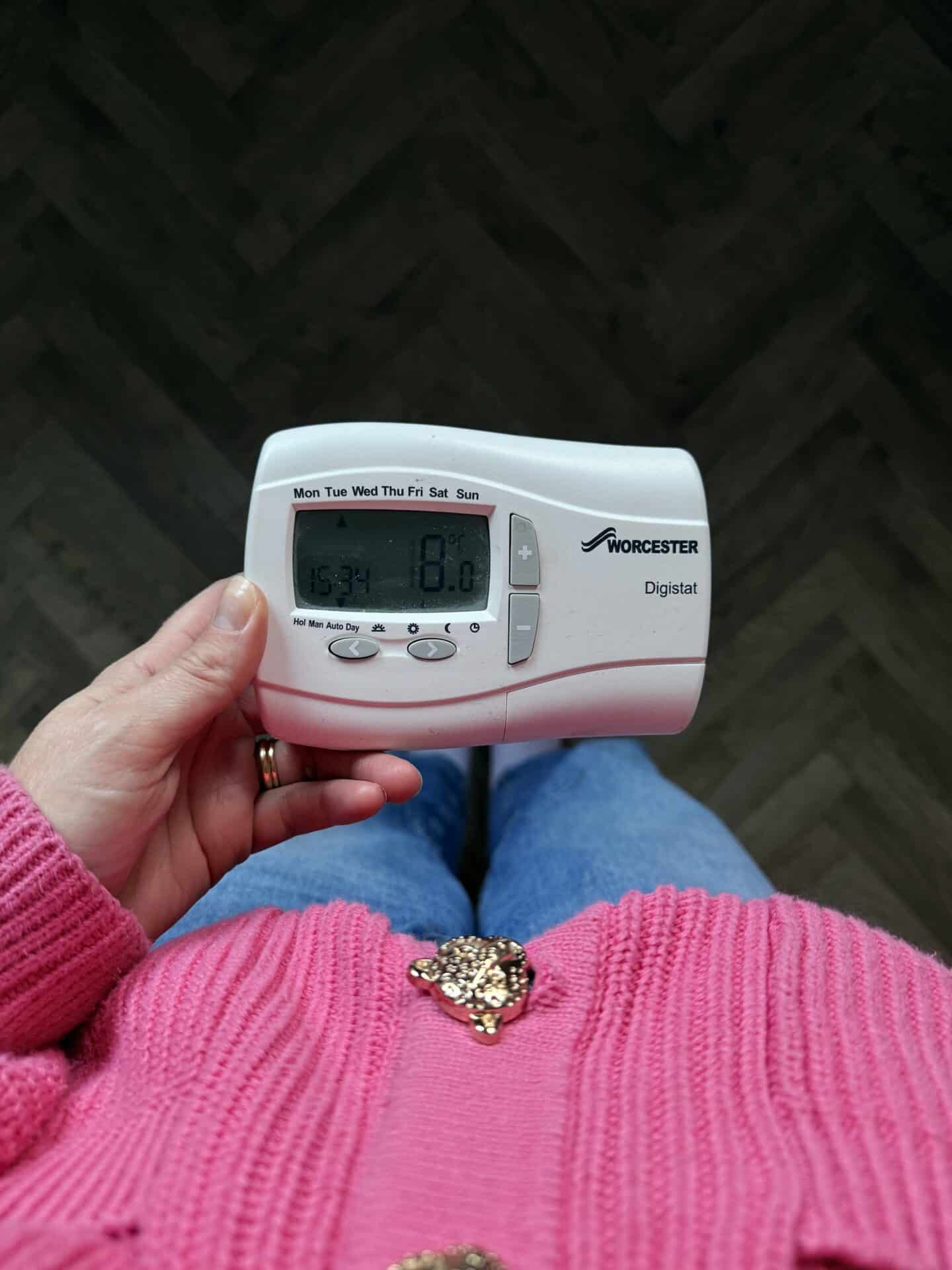
Most people don’t notice the difference between 21°C and 20°C, and the Energy Saving Trust estimates the saving for a typical home at around £90 a year. It cuts your carbon footprint too, without you having to do anything else. Just don’t go below 18°C in the rooms you use. Our thermostat is set so that the heating goes on at 18°. That means we don’t have any wiggle room here, unfortunately.
Heat the Rooms You Use
Turn radiator valves down in spare rooms and hallways, and close internal doors to keep the warmth where you are.
Use Timers Rather Than the On/Off Switch
Set the heating to come on shortly before you wake up and before you get home, rather than running it all day or blasting it when the house is already cold. You can get digital plug timers that work with an app, for your plug in heaters. They’ll start warming up the air before you go into the room.
Lower Your Boiler’s Flow Temperature
Many combi boilers are set higher than they need to be. Turning the flow temperature down to around 60°C can help a condensing boiler run more efficiently, so it burns less gas, without making the house noticeably colder.
Stop the Draughts (With What You Already Have)
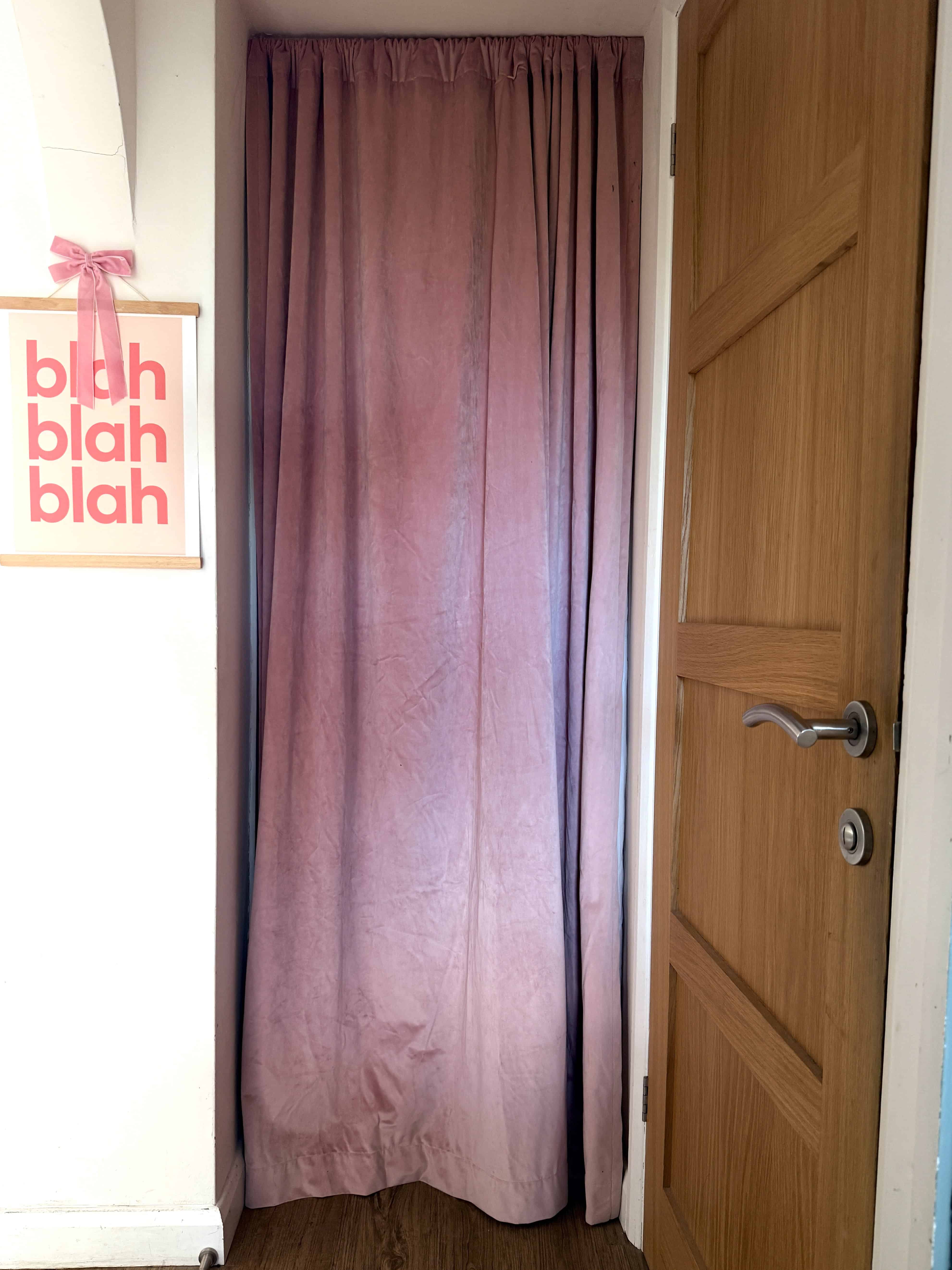
Draught excluders on doors, letterbox brushes and closing the curtains at dusk all hold heat in for very little cost. You don’t need to buy anything new, either. An old pair of tights or a worn-out jumper stuffed with fabric scraps makes a perfectly good draught excluder, and it keeps them out of landfill. If you need thicker curtains, charity shops and Vinted are great places to find lined ones second-hand.
I hang my velvet curtain on a tension pole, so it’s easy to take down when it gets warmer.
The other curtain is in our kids’ reading den. You can find out how I made the offcuts into matching draft excluders here.
Heat the Person When You’re Sitting Still
A heated throw or electric blanket costs a few pence an hour and uses far less energy than heating a whole room. A cosy wool blanket you already own costs nothing at all.
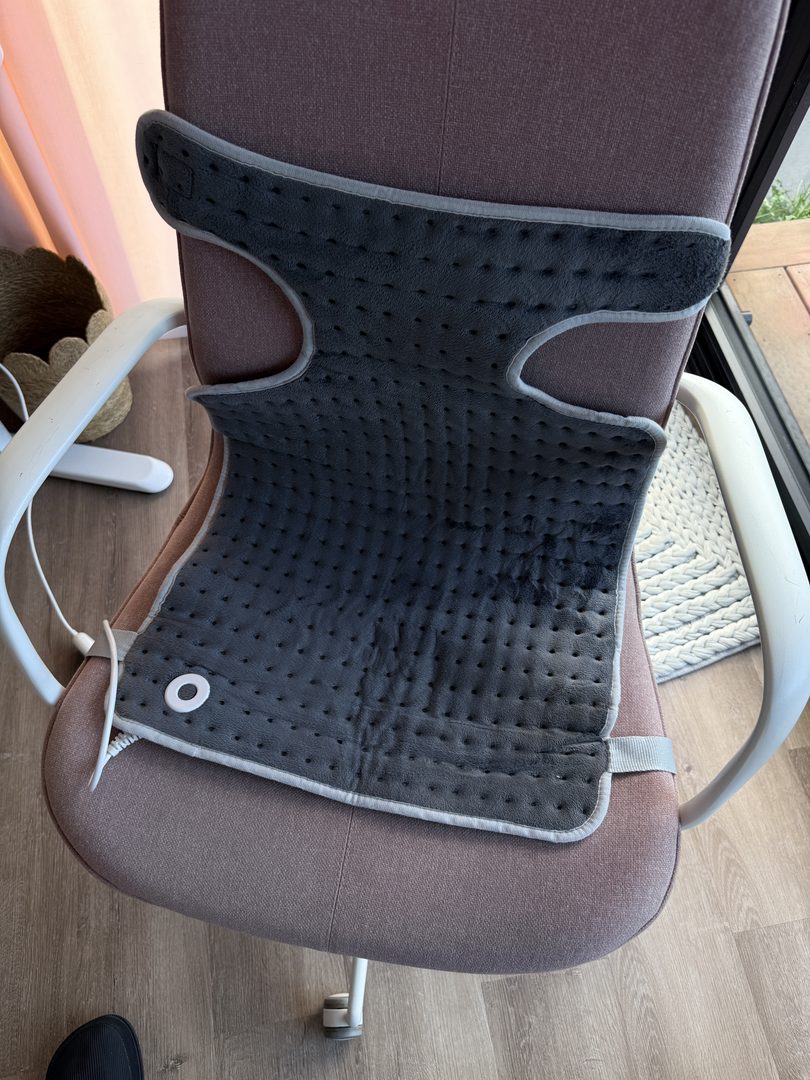
I love my heated throw, and I have a heated underblanket for my side of the bed too. I also love my heated seat pad, that I turn on when I’m working for my freelance copywriting clients.
Use a Portable Heater for One Room
If you’re working from home on your own or sitting in one room for the evening, a portable heater with a thermostat and timer lets you keep the central heating off everywhere else. Choose the right size for the room: a lower wattage heater on a thermostat in a small room usually beats a powerful heater on full blast. I use my oil-filled radiator on a timer in my cabin. And I have a fan heater to give a quick blast of heat every now and then.
A heater isn’t an eco product in itself, but using one to heat just the room you’re in can mean using less energy overall. If you’re buying one, Pro Breeze has a range of portable heaters, and it’s worth choosing one with a thermostat and timer so it only runs when you need it. Look after it and it should last for years. When an electrical item does reach the end of its life, don’t put it in the bin. Most shops that sell electricals have to take old ones back for recycling, and your local tip will take them too.
Dry Laundry Without the Damp
Drying clothes on radiators adds moisture to cold rooms and makes the radiators work harder. A dehumidifier can dry washing indoors while tackling condensation, and it usually uses far less energy than a tumble dryer. On a dry, breezy winter day, the washing line is still the greenest option of all.
Check What Help You’re Entitled To
If you live in England and your home is in council tax bands A to D, look out for the £100 Household Energy Payment. It’s also worth checking whether you’re eligible for the Warm Home Discount.Iif you’re struggling to pay, talk to your supplier early. They have to help.
Heat Smarter, Not Less
So, should you use your heating to stay warm at home this winter? Yes, but on your own terms. Switching it off entirely risks your health, your home and, often, a bigger bill (and more waste) later. Heating every room all day is the expensive, high-carbon extreme at the other end.
The sweet spot sits in between. Keep the rooms you use at 18°C or above, letting timers and thermostats do the work. And reach for targeted heat when only one room needs it.
None of us can heat our way to a greener planet, but small, everyday habits and smarter ways of thinking add up. Once they become routine, you’ll hardly notice you’re doing them… apart from when the bill arrives, hopefully less than expected!


