{Ad} This is a paid collaboration, and may contain affiliate links. All opinions are honest, as always.
Most eco-minded households have worked through the obvious swaps by now: reusable bottles, refill shops, a loofah where the foam sponge used to sit.
The petrol mower in the shed can be easier to overlook. It gets filled, runs on a Saturday, and goes back in the shed between cuts. But garden habits count too. My post on 12 easy zero waste swaps shows how small changes can add up; the way we mow is another place to look.
This post compares petrol and robot mowers on emissions, running costs and wildlife, including where a robot mower may not be the better choice.
What a Petrol Mower Puts Into the Air

A small petrol engine burns fuel with little control over what leaves the exhaust. Most mowers have no catalytic converter, so nitrogen oxides, unburnt hydrocarbons and carbon monoxide go straight into the air above the lawn, along with the carbon dioxide.
Older studies compared an hour of mowing to a long car journey for some of these pollutants. The exact figures vary with engine age and method, so treat any single number with care. The direction is consistent, though: for the work it does, a petrol mower is a dirty machine.
Poor maintenance can make matters worse. Worn parts and clogged filters can affect how cleanly and efficiently an engine runs. Servicing helps, though it cannot add the exhaust treatment the engine never had.
The rest of the footprint is easy to miss. Fuel spills at the can and the tank. Petrol left in the shed over winter goes stale, and the leftovers need careful disposal. Then there is the noise, which carries over every fence on the street.
How a Robot Mower Works Differently
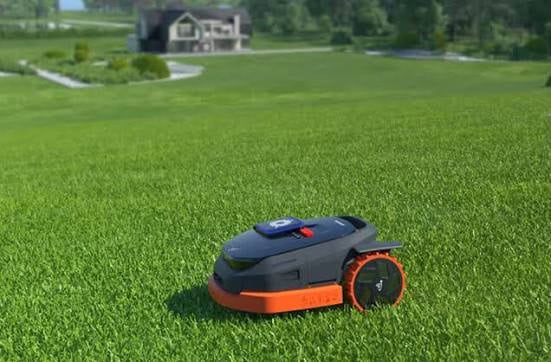
A robot mower runs on a rechargeable battery and charges from an ordinary socket. An emission-free robot lawn mower puts no exhaust into the garden while it works, and there is no petrol to store. Here, ’emission-free’ means no exhaust emissions during use, not zero emissions from electricity generation or manufacture.
The bigger change is the cutting pattern. Instead of one long session at the weekend, it mows a little on most days and takes off a few millimetres at a time.
That suits the lawn. Short clippings fall between the blades, break down quickly and return nutrients to the soil, which can reduce both green waste and the need for fertiliser.
Collecting clippings after a weekly cut creates more material to compost or dispose of, although petrol mulching mowers can return fine clippings to the lawn too. Cutting a little higher and leaving fine clippings on the surface also shades the soil and helps the lawn hold moisture, which fits with my tips on saving water quickly and easily.
Quieter cutting is another benefit. Robot mowers are generally quieter than petrol models, though noise varies by machine and conditions. Compare model specifications and keep mowing to suitable daylight hours.
And modern wire-free models such as Segway Navimow skip the boundary cable altogether. You map the lawn in the app, set a schedule, and adjust it as the grass grows faster or slower. You don’t have to bury cable along the edges, or dig it up and replace it if it snaps.
The Running Costs and Carbon Compared
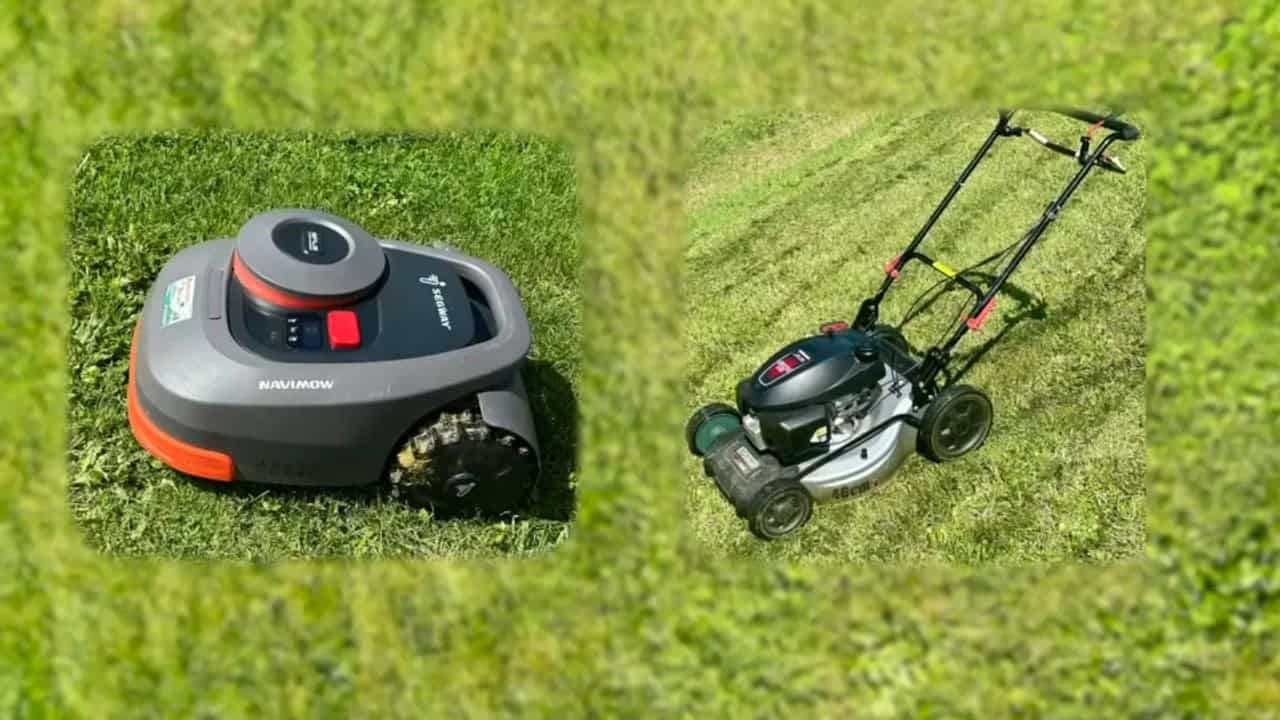
Running a petrol mower means buying fuel and oil, then servicing the spark plug and air filter each year. In comparison, a robot mower draws from the mains (for charging), and the electricity for a season of mowing is usually modest next to the cost of petrol for the same ground.
On carbon, a robot mower can compare favourably with petrol, but the saving depends on electricity use, the power supply and the machine’s lifespan. Charging with surplus rooftop solar can reduce reliance on grid electricity; a green tariff alone does not guarantee the same benefit.
Lifespan changes the sums. Keeping a mower working for longer spreads its manufacturing footprint over more cuts; there is no fixed ten-year rule for a robot mower to become worthwhile. Compare costs over the same period, including servicing, replacement blades and any battery replacement, not just the purchase price.
Anyone pricing up a robot mower should compare more than the sticker price. Cutting height range, battery warranty, charging draw, and spare parts all affect how green the machine stays over its life.
When a Robot Mower May Not Be Greener
Every robot mower carries a manufacturing footprint before it cuts a blade of grass. Batteries, motors and electronics cost energy and materials to make, and a mower used for ten years spreads that cost further than one replaced after three. Long warranties, replaceable blades and available spare parts are the signs of a machine built to last.
The grid matters as well. Charging from a high-carbon supply can narrow or outweigh the benefit, so an electric motor alone is not proof of a lower overall footprint.
Reducing the Risk to Wildlife
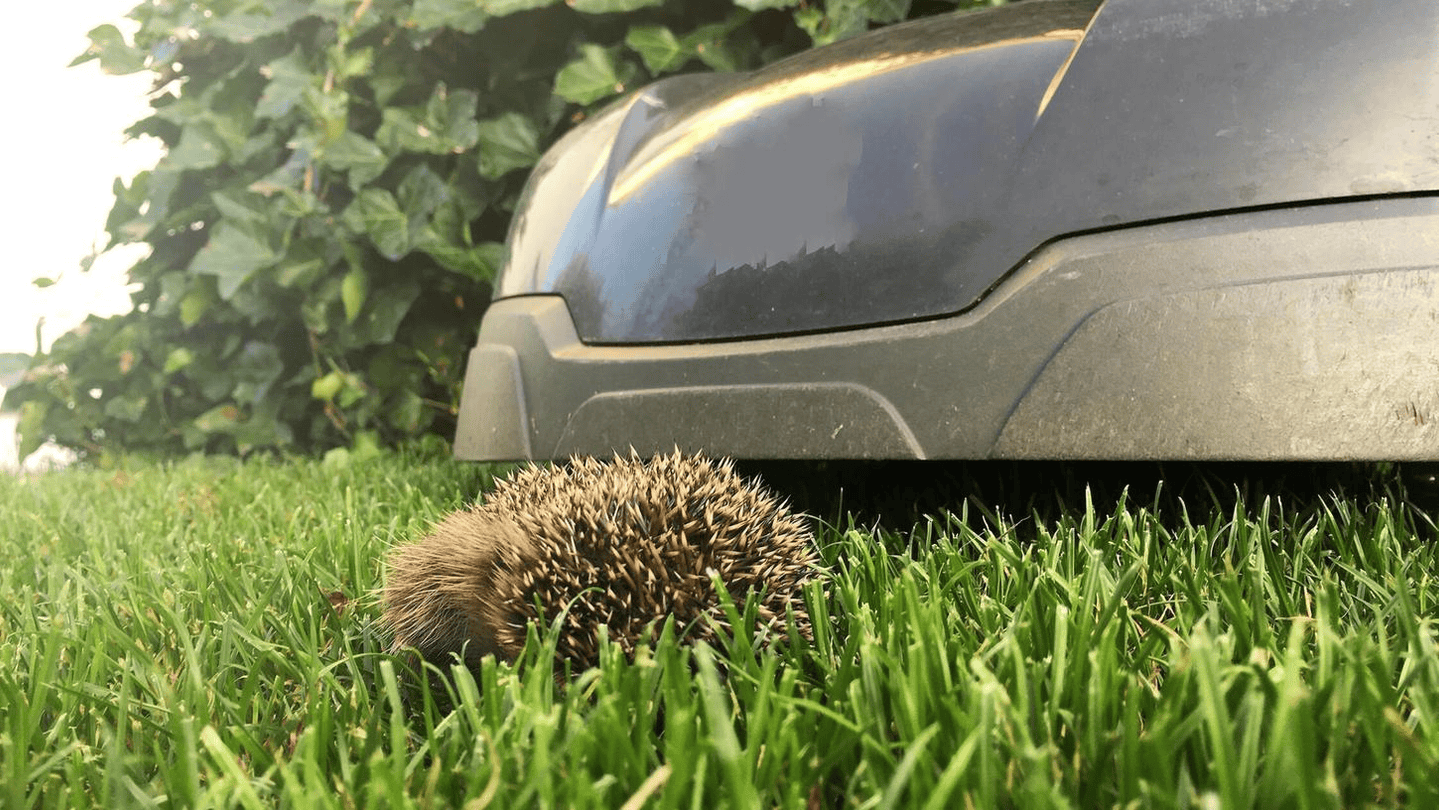
Robot mowers raise one risk that deserves plain words. Hedgehogs are active at night, and when threatened they curl up and rely on their spines, which do nothing against a blade.
Dr Sophie Lund Rasmussen of Oxford University tested robot mowers using hedgehog carcasses in research backed by the British Hedgehog Preservation Society. All models in those tests needed physical contact to detect a hedgehog, and some failed to detect it. These findings describe the tested machines, not every model now on sale; obstacle sensors should not replace lawn checks.
The advice from the researchers and the society is simple. Run the mower in daylight only, and check the lawn before it starts. Choose a window well within daylight hours, adjusting for the season, and avoid dawn, dusk and night. Keep children and pets off the lawn while mowing, following the model’s safety instructions.
Sleeping spots matter too. Leave a rough corner at the edge of the garden, keep leaf piles and brash outside the mowing area, and check how a model handles obstacles before buying. A gap of 13cm at the base of a fence lets hedgehogs travel between gardens, and a wilder pocket gives insects somewhere to feed.
Zones help here. The Navimow X4 Series offers app-based zone management, including no-go areas. Use an exclusion zone to leave a meadow-style strip unmown for clover, daisies and visiting insects; simply raising the cutting height is not the same as letting flowers bloom.
So, Is a Robot Mower Greener?
For a lawn that gets regular petrol cuts, a robot mower can be a greener option, but it is not an automatic win. It avoids exhaust at the lawn, removes the need to handle petrol and returns fine clippings to the soil. The overall case depends on energy use, lifespan, repairability and responsible battery recycling, alongside daylight mowing and wildlife checks.
For a small lawn with a mower that still works, the better swap may be to wait. Keep what you have, mow a little less, and choose electric when the time comes.